Ridwan Popoola

Full Name: Ridwan Popoola
Date of Birth: Nov. 19, 2006 (19)
Nationality: Nigerian 🇳🇬
Current Club: Kisvárda FC
League: NB 1
Contract Expiry: June 30, 2030
Current MV: €500K
Player Agent: BFM
Preferred Foot: Right
Height : 1.88M


↑
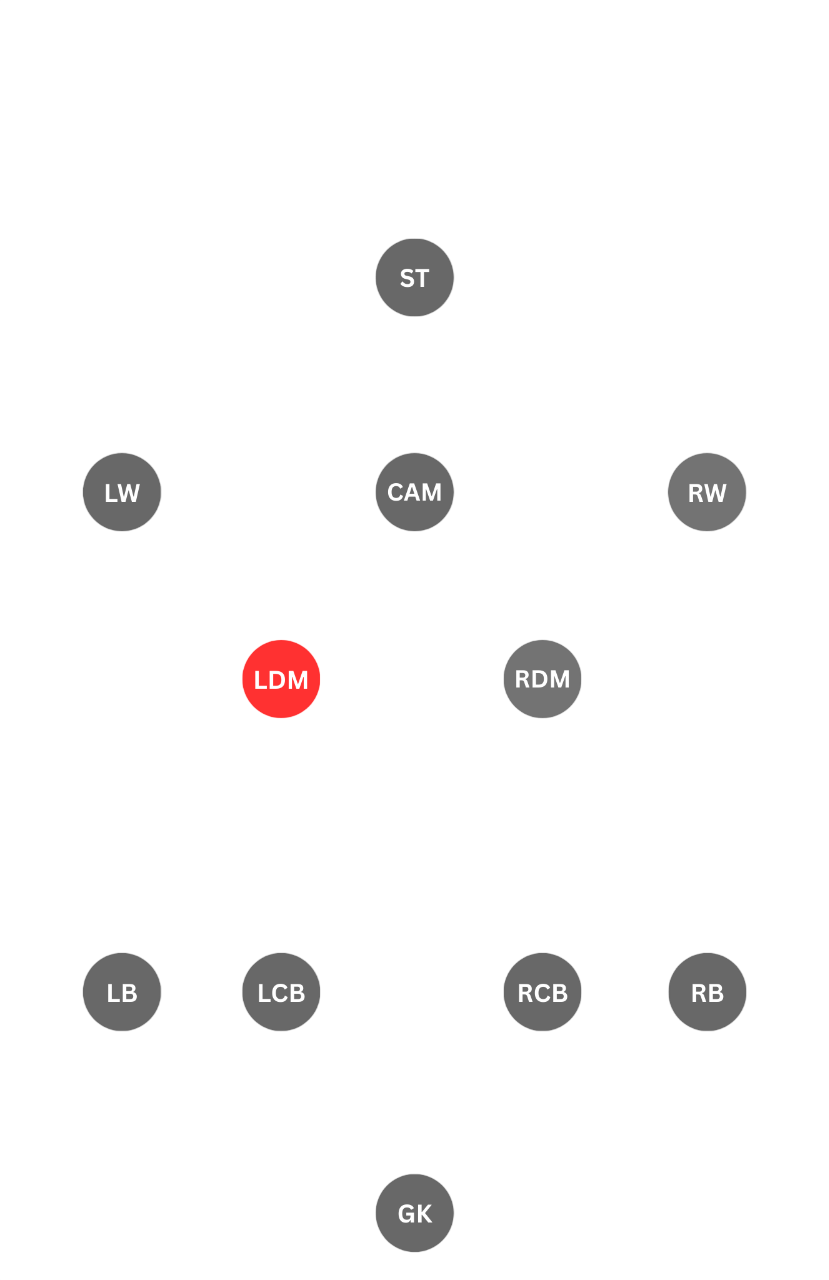
← Heatmap
Best Suited To →
Role: Hybrid #6
Behaviors
On-Ball Behavior:
Positions himself centrally to block passing lanes and disrupt build-up rather than drifting wide to chase actions
Reads loose balls and second phases early; consistently reacts first to regain possession
Steps into duels with conviction, relying on timing and anticipation to break opposition rhythm
Covers large defensive zones with energy, though occasional forward overcommitment can leave space behind him
Off-Ball Behavior:
Calm and secure under pressure; receives cleanly and protects the ball well in tight central areas
Favors control and retention, prioritizing tempo stability over forcing progression
Rarely loses possession, but vertical intent is inconsistent — more recycler than line-breaker at this stage
Passing choices are safe and measured, with clear room to grow in decisiveness and forward ambition
Player DNA — Ridwan Popoola
Pure Traits 🟢 Will Travel
- Ball-winning instinct. Reads second balls early and moves like he already knows where play is going. Disrupts flow without needing chaos around him.
- Press resistance. Comfortable taking contact in central zones. Doesn’t panic, doesn’t gift turnovers, and is hard to strip even when crowded.
- Defensive motor. Covers space with repeat intensity. Reacts quickly after turnovers and stays involved across long phases instead of switching off.
System Traits 🔴 Environment Dependent
- Progressive passing output. Currently more “keep us stable” than “break you open.” Next level depends on coaching permission and patterns that encourage verticality.
- Stepping aggression. Jumps forward to kill moments, which is a weapon, but needs structure behind him. In loose teams, it can donate free space.
Context-Enhanced Traits 🟡 Situation Dependent
- Duel control. Stronger when the game is on the floor. If the league becomes aerial warfare and constant second balls, that edge narrows until timing improves.
- Transition value. The more chaotic the match, the more he pops. In slow, sterile possession games, influence can look quiet unless progression becomes more proactive.
Exposed Traits ⚫ Will Be Targeted
- Aerial duels. Opponents will test him — not due to size, but because timing and assertiveness aren’t consistently there yet.
- Vertical threat. Teams can sit off knowing he leans safe. Without line-breaking intent, he risks becoming a “useful” midfielder rather than a difference-maker.
Athletic Profile
- Acceleration: Quick — sharp first reaction, especially on loose balls and counter-press moments.
- Endurance: Engine — repeat intensity, natural ground coverage, doesn’t fade out of games.
- Strength: Average — solid in ground duels, less convincing in vertical or purely physical contests.
- Agility: Good — mobile in short spaces, shifts laterally well, closes passing lanes quickly.
Cognitive Profile
- Decision speed: Quick — defensive decisions arrive fast; on-ball progression more deliberate, sometimes too polite.
- Risk profile: Cautious — security-first passer; stays clean but limits ceiling without more intent.
- Spatial awareness: Good — positions centrally to block lanes and read danger rather than chasing wide actions.
- Adaptability: Role-clarity dependent — give him a defined job and he executes; growth hinges on moving from executing to dictating.
Psychological Markers
- Big game performance: Stable — defensive output feels repeatable rather than opponent-dependent.
- Mistake reaction: Resilient — doesn’t spiral; returns to the next action quickly.
- Consistency: Reliable — defensive habits show up every match; strong base.
- Competitive mentality: Fighter — plays like he enjoys contact and disruption, not like he’s surviving it.
Development Priorities
- Aerial consistency. Win more first contacts and second balls to become a true top-league #6.
- Progressive decision-making. Add line breaks: punchier passes, earlier forward choices, more intent.
- Engagement timing. Keep the aggression, refine when to step vs hold to stop donating space behind him.
Travel Readiness Score: 6 / 10
- Strong base of transferable traits and should adapt to multiple environments, yet weaknesses can be targeted without proper development. Success depends on avoiding systems that exaggerate aerial and progression limitations.

Transferability & Scalability
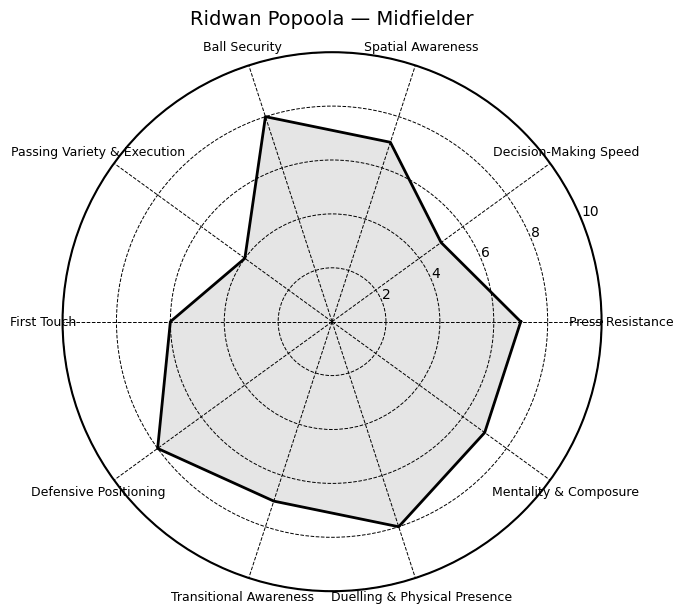
Glossary of Traits
Cognitive Traits: Press Resistance, Decision-Making Speed, Spatial Awareness
Technical Execution: Ball Security, Passing Variety & Execution, First Touch
Tactical Intelligence: Defensive Positioning, Transitional Awareness
Physical & Psychological: Duelling & Physical Presence, Mentality & Composure
League Scores (1–10)
Premier League → 4.5/10
The physical and tempo demands would likely rush his decision-making and overexpose his limited vertical ambition. He’d survive moments, but development would skew toward containment rather than growth.
La Liga → 6/10
The tactical rhythm and emphasis on positional discipline suit his reading of the game. However, the slower pace may not consistently force improvement in his assertiveness or aerial competitiveness.
Bundesliga → 6/10
Transition-heavy environments would highlight his defensive instincts and engine, but the speed of play could amplify his hesitancy in progressive actions unless paired with a very structured role.
Serie A → 6/10
Strong fit for learning spacing, timing, and defensive nuance as a #6. Would benefit his positional intelligence, though ball progression demands may remain secondary unless deliberately coached.
Ligue 1 → 7/10
A good balance of physical duels and transitional moments without overwhelming tactical complexity. Offers regular exposure to athletic midfield battles while still allowing room to refine on-ball bravery.
Eredivisie → 8/10
Best environment for controlled development. Press resistance and ball security are rewarded, while the league naturally encourages growth in vertical passing and decision-making without punishing early mistakes.
Generic Trait Scale Glossary (1–10)
1 – Deficient: Consistently below professional standard. Major liability when tested in this area.
3 – Weak: Shows glimpses but unreliable. Can function in low-pressure moments but often exposed.
5 – Functional: Meets baseline professional competency. Adequate in most situations but not a strength.
7 – Strong: Above average for the level. Reliable, impactful, and holds up across different contexts.
10 – Elite: Defines games at the highest level. Exceptional, rare, and scalable to top competitions.
Projection & Risk Assessment
🔧 1. Development Risk
How likely is this player to not reach their expected technical, physical, or tactical potential?
| Score | Meaning | Indicators |
|---|---|---|
| 1 (Minimal Risk) | Already playing at high level for age; consistent starter; no major injury history; strong learning curve | >2000 senior mins/year, stable club, shows tactical discipline | 2 (Low) | Consistent developmental pathway, maybe small injury concern or plateauing at times | U21 mins + upward trajectory, mentally mature |
| 3 (Medium) | Decent base but red flags exist (inconsistency, stalling, low-level environment, minutes managed) | Bench role or reserves, decent but stagnant tools |
| 4 (High) | Poor development history, low minutes, injuries, miscast in current role, maturity questions | Bounces clubs, repeated injuries, no U21/first team pathway |
| 5 (Extreme) | Almost no evidence of upward curve, physical regression or consistent injuries; major red flag | Hasn’t played >500 mins in a season, out of favor at multiple clubs |
💰 3. Market Risk
How risky is this player from a valuation perspective (age, hype, exposure, volatility, transfer context)?
| Score | Meaning | Indicators |
|---|---|---|
| 1 (Minimal Risk) | Under-the-radar gem, low price, high upside | Cheap buy from under-scouted markets |
| 2 (Low) | Reasonable valuation for age/potential, not overhyped | Good fit financially, no major bidding war |
| 3 (Medium) | Slightly inflated due to club, media, or agent | Plays at high-visibility club, small overpay risk |
| 4 (High) | Overpriced or being shopped aggressively | Club actively pushing sale, no market bidding pressure |
| 5 (Extreme) | Big fee required and no guarantee of resale | Already failed at bigger club, high wage profile, agent-driven |
🧠 2. Psychological Risk
How much uncertainty exists around mentality, focus, motivation, and adaptability?
| Score | Meaning | Indicators | 1 (Minimal Risk) | Mature beyond years, proven adaptability, team-first attitude | No off-field drama, thrives under pressure, self-regulating |
|---|---|---|
| 2 (Low) | Good profile, small worries about competitiveness or emotionality | May need mentorship but highly coachable |
| 3 (Medium) | Sometimes drifts, hot-and-cold, needs structure | Prone to coasting in weaker environments |
| 4 (High) | Struggles with adversity, questionable attitude, arrogance or insecurity | Off-field incidents, doesn’t respond to tactical feedback |
| 5 (Extreme) | Actively sabotages growth. Ego-driven, mentally erratic, disciplinary issues | Known locker room problem, multiple coach/club clashes |
🧩 4. Systemic Risk
How heavily does this player rely on a specific system or role to succeed?
| Score | Meaning | Indicators |
|---|---|---|
| 1 (Minimal Risk) | Plays reliably across systems and role types | Press-resistant, strong spatial awareness, tactically flexible |
| 2 (Low) | Better in some setups but still contributes in multiple roles | Slight drop in output outside ideal role | 3 (Medium) | Clearly has a “best system” and drops off elsewhere | Needs possession-based system or double pivot partner |
| 4 (High) | Struggles when not in exact tactical blueprint | Lost without pressing cues, or weak in non-transition games |
| 5 (Extreme) | Unusable outside of a niche structure | Cannot press, cannot hold, cannot rotate positions |
Summary
Verdict Statement:
A young hybrid #6 with real defensive instincts and composure beyond his age, already comfortable anchoring midfield phases. His game is built on timing, awareness, and control rather than volume or dominance, which gives him a strong base but leaves clear next steps.
Good/Bad Split
Good:
Strong defensive reading for a 19 year old; anticipates second balls and disrupts rhythm early
Calm and secure in possession under pressure, especially centrally
Covers ground well and stays connected to the defensive structure
Competitive profile without being chaotic; plays within himself
Bad:
Limited vertical ambition on the ball at this stage
Aerial duels are inconsistent, more timing than authority
Can step out aggressively and leave space behind if structure breaks
B.A.S.E. Potential Rating -
7/10: ⚽️ ⚽️ ⚽️ ⚽️ ⚽️ ⚽️ ⚽️
Projection: Projects as a reliable top-division midfielder who can anchor or support a double pivot, particularly in leagues that value structure and game intelligence. Ceiling depends on whether his progressive passing and physical assertiveness catch up to his defensive instincts.